


Jacksonville Jaguars Relocation to Toronto
- Jun 13, 2022
- 25 min read
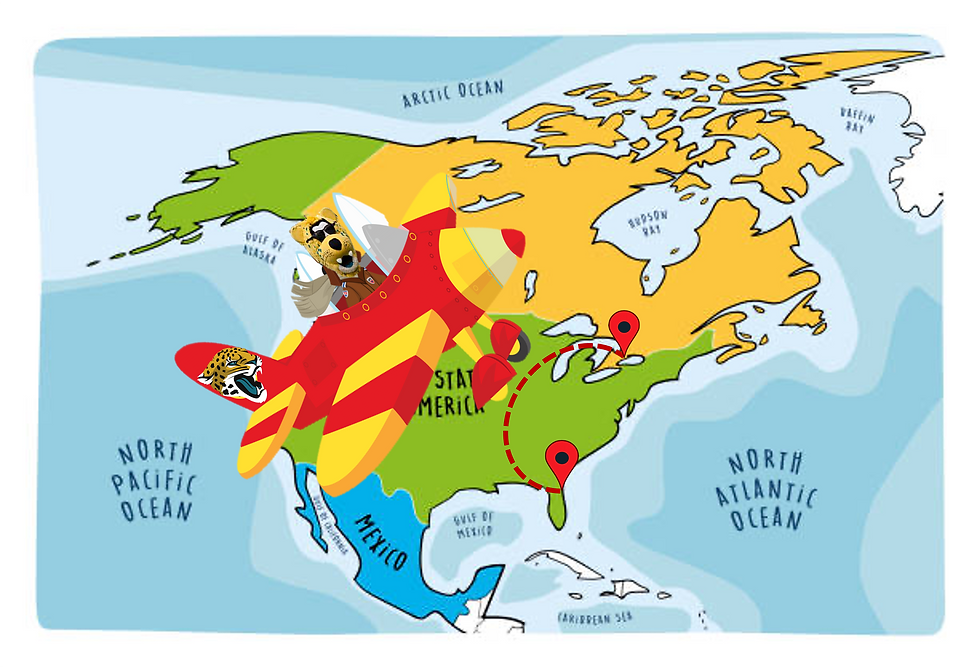
This paper aims to explore the possibility of the Jacksonville Jaguars being relocated to Toronto, Ontario, Canada, and the best way for Shad Khan and the rest of the organization to go about this. The paper begins with a literature review on Jacksonville and the Jaguars, NFL relocations, and Toronto, which will provide background information on the situation. Following the literature review, the methods for the analysis and research done will be explained in detail. This section includes where the data and information were found, as well as how important data was determined. The results of the research using the methods described will be explained and visualized in their own section. At the end, recommendations to the organization regarding the relocation of the organization, as well as recommendations on the financial situation of the team and salary cap and recommendations on promotions and ticketing strategies will be provided.
Literature Review
Jacksonville and the Jaguars
Jacksonville is the largest city in the state of Florida and the largest in the Continental United States by land mass[1]. With 938,717 people in the city, Jacksonville ranks 13th in the United States[2] and 36th largest population in North America[3] in terms of population. Even with the massive population, Jacksonville is the 189th most densely populated city in the United States. The population density is more closely represented in the city’s marketability for sports teams. With only 757,000 homes in the city, Jacksonville has been ranked the 43rd largest market in the United States[4]. Due to the small market, Jacksonville has only one professional team, the Jaguars, and there have been no rumors lately of them adding another in any of the major four professional sports leagues: MLB, NBA, NFL, and NHL.
In 1995, owner Wayne Weaver decided to call Jacksonville home by creating the Jaguars and call Jacksonville Municipal Stadium, now TIAA Bank Stadium, home. The Jaguars are traditionally one of the worst teams in the NFL, making the playoffs only seven times in the 27 years of the franchise. Over those 27 years, they are 180-253-0, which brings them to a 41.6-win percentage. In 2005, the Jaguars had to install tarps to cover about 10,000 seats in TIAA Bank Stadium as to avoid local blackouts due to poor attendance[5], likely due to poor performance on the field. After 16 years of ownership, Wayne Weaver decided to sell the team and Shahid (Shad) Khan ended up winning the bid for the franchise[6]. Along with the Jaguars, Khan also bought the Premier League’s Fulham football club and has since created All Elite Wrestling (AEW) with his son Tony[7].
From almost Khan’s first year of ownership, the Jaguars have been rumored to relocate. The most common spot for this relocation is London, England, where Fulham football club resides. Flaming these rumors of relocation to London is the fact that the Jaguars have played one “home” game in London every year since Khan’s purchase, outside of COVID-19 affected travel year. This trend is set to continue through 2024, as the Jaguars received approval for a three-year contract to play in Wembley Stadium[8]. Along with this new contract, the Jaguars were one of the six NFL franchises that were granted access to market themselves in the United Kingdom[9]. This clear desire for more than what Jacksonville can offer only stokes the rumor flames surrounding the relocation of the Jaguars.
Relocation in the NFL
Throughout the history of the big four professional leagues in the United States, there have been 55 relocations of franchises[10]. Of those 55, 12 have been in the NFL, with the first once occurring when the Chicago Cardinals moved to St. Louis in 1960. Even though there have been 12 relocations in NFL history, only 7 franchises have relocated. The Cardinals, Chargers, Raiders, and Rams have all relocated multiple times in their long histories.
Figure 1
Figure 1 shows all the locations professional franchises moved to (on the left) and where they came from (on the right). Circles that are broken into multiple slices represent cities in which multiple franchises have moved to or from the city, with the color representing the distance traveled for the move. As is visible in the figure above, teams have landed in nine different cities, while only eight cities have been left for greener pastures. Of all the cities represented, Los Angeles has experienced the most moves. They have welcomed three franchises and have said goodbye to the same amount. All these moves are associated with three franchises, the Chargers, Raiders, and Rams, all leaving and coming back or vice versa. The potential move of the Jaguars to Toronto would mark the first international relocation in the NFL, but not the first in North American sports. Two times an NHL team from Atlanta has relocated across the northern border, one time going to Calgary and the next going to Winnipeg.

Relocations in the NFL have been occurring for 62 years, but they have not occurred steadily over time. As seen in Plot 1, relocations seem to be bunched in groups of three. If the NFL followed this trend, the relocations, for now, would be complete, with the Rams, Chargers, and Raiders all relocating since 2016. This is a trend that could be broken with the move of the Jaguars for the same reasons the other three franchises have moved in the last six years, stadiums.
The Chargers[11], Raiders[12], and Rams[13] all left their host cities due to situations regarding the stadium they played in before the move. For the Chargers and Raiders, it was due to disagreements with the city on who will pay for a new stadium or for renovations to the stadium that is currently standing. For the Rams, it was more that the owner had bought land in Los Angeles with his eyes set on building a massive stadium on that land. The Jaguars could find themselves in this situation as well. They have been in TIAA Bank Stadium since 1995, which makes it the 7th oldest stadium in use league-wide[14]. Since then, TIAA Bank Stadium has seen renovations twice. The first renovation was in the months following Khan’s purchase of the franchise. In 2013, Khan put forward $20 million to assist Jacksonville in renovating the stadium, adding swimming pools on the terrace and the “world’s largest” scoreboards on both ends of the stadium. Three years later, another collaboration of funds was approved to upgrade club seating and add an amphitheater and flex field to the stadium5.
The Rams had other reasons that compounded on the desire for a new stadium, that the Jaguars have in common. On top of Stan Kroenke buying land in Inglewood, the Rams faced poor fan engagement in a small market. Before the move, the Rams posted the third-worst game attendance in the NFL13. St. Louis is the 23rd largest sports market in the United States and is now host to two professional franchises, the Blues and Cardinals. In comparison, Los Angeles has 4.6 times as many households as St. Louis to land as the second-largest market in the United States4. This massive increase in market size held only potential in ticket sales and fan engagement with more people within the host city. This past year the rams ranked eighth in the NFL in average home attendance at 100.1 percent capacity on average[15]. This is exactly what Stan Kroenke and the Rams organization wished would occur when they moved to a larger market. Along with the massive increase in attendance, the Rams were able to host, and win, the Super Bowl. Hosting the Super Bowl is a great opportunity to generate fan engagement with the Rams organization, and it is an opportunity that could have never happened if they stayed in St. Louis. The Jaguars are potentially in the same boat as the Rams were before they moved to Los Angeles.

As seen in Plot 2, the Jaguars have only twice over the past decade above average in home attendance. One time was during the COVID-19-affected season when about half the teams did not host any fans for the entire season, and the other time was the year following a year in which the team lost in the AFC Championship, an outlier season to say the least. The year after they finished as one of the four best teams in the NFL, they were still only able to barely crack the average home attendance in the NFL. Moderate fan engagement and ticket sales in one of the smallest professional sports markets in the United States is a situation that creates an opportunity for relocation and growth after the move.
Toronto, Ontario, Canada
Toronto is the capital of the Ontario providence and is the largest city in Canada with a population of 2.6 million people, which is 1 million more than the next largest city[16]. Along with being the largest city in Canada, Toronto is the 5th largest city in all of North America3. It sits right on the coast of Lake Ontario’s northern shore, right across the lake from Niagara Falls. Toronto is home to three professional teams in the big four sports (Maple Leafs, Blue Jays, and Raptors), along with a Major League Soccer club and a Canadian Football League team. Being host to all these franchises is likely the result of it being the sixth-largest sports market in the United States and Canada[17]. Those five teams have won four championships, one NBA Championship, one MLS Cup, and two Grey Cups, since 2012, the year Shad Khan bought the Jaguars. This massive market with a rich history of success also has an interest in the NFL.
The NFL’s reach to Toronto and Canada is not new. The NFL has been playing games in Toronto since 1959 when the Chicago Cardinals played the Toronto Argonauts in an interleague game. Moving 60 years into the future, Toronto is one of three international cities to host a regular-season game, along with London and Mexico City[18]. The NFL has not returned to Toronto since 2013[19], which is likely a reason for the viewership decline in Canada in the following years. However, since 2020, the NFL viewership in Canada has been on the rise. Even though the Canadian Football League (CFL) still has a stronghold in the western part of the country, the NFL has generated an increasing viewer base in all regions of the country. The NFL is most popular in the Prairies and the eastern part of the country, specifically the province of Ontario, where Toronto is located. About half the population in the Prairies and Ontario watch NFL games. Comparing that to about one-fifth of Ontario citizens who watch exclusively CFL games shows that the NFL is gaining the upper hand within the province18.
Along with the raising viewership numbers, there is a raising number of football players in the NFL. At the start of the 2021 season, 14 Canadian-born players were on active 53-man rosters on 18 of the 32 NFL teams. This is only four off from the mist Canadians to make an NFL roster in a season, which was set in 2005. If those on practice squads and reserve lists were included, the number would reach 25. A few notable players from Canada include Christian Covington, Josh Palmer, Neville Gallimore, and Chase Claypool[20]. Canadian players are not all veterans too, as this year marked the third-straight draft in which multiple Canadians were drafted. John Metchie from Alabama and Jesse Luketa from Penn State were the two Canadians drafted to reach this achievement[21]. As more Canadians are drafted and are on the field, it is expected that the interest across the entire country will continue to grow. While everything about the city of Toronto seems perfect for an NFL franchise and NFL engagement is on the rise, what makes this a better option than other top candidate cities such as London, Mexico City, San Antonio, and St. Louis?
The biggest argument against a team in London is travel. The distance from London to the closest NFL franchise, which is located in Boston, is 3272 miles (5265.77km). This is compared to the 2732 miles (4396.73km) between Miami and Seattle, the two furthest NFL host cities from each other[22]. The difference here is about 500 miles or the distance from Chicago to Buffalo[23]. On top of travel, the time change is a massive factor. London is five hours later than Boston and eight hours later than Los Angeles. This time change can have massive effects on players when this type of travel is done weekly or biweekly for five months out of the year.
For St. Louis, the reason is simple. The NFL has tried St. Louis over and over again throughout its history, yet a team is never able to stick in the city. The Rams’ last stint in St. Louis even included a Super Bowl and still, the team was not able to stay relevant in the eyes of the fans. San Antonio is an interesting prospect city for an expansion team. A team in San Antonio would put three NFL teams in the state of Texas, matching Florida and California. The issue here is that San Antonio is the 31st largest market4, one not nearly as large as Toronto, and the franchise would have to immediately compete with Texans and Cowboys fans for eyes in their market. In a market that is already rather small, this is a huge risk to take for a relocation. Last is Mexico City. Mexico City is the largest metropolitan area in North America3 and would likely be the largest sports market in North America, even rivaling New York City and Los Angeles. Mexico City is 763 miles (1228km) from the nearest NFL market (Houston) and is in the same time zone. Mexico City is a perfect fit, except for the political strife between the United States towards Mexico in recent years. A move to Canada is much less likely to create some form of political situation surrounding the team and the league compared to a move to Mexico.
Methods
Data for the financial situation of the team was found mostly from Forbes[24], Spotrac[25], and Over the Cap[26]. Forbes was used to gather data on the financial and valuation status of the Jaguars. This information was used to compare the Jaguars to other NFL teams and to Toronto-based big four sports teams to get an idea of what the Jaguars could form into after a relocation. Spotrac Premium was needed to access all the contact and salary cap information for the Jaguars and other NFL teams. Without premium, only three years of salary cap breakdown are accessible, so premium was needed to gather enough data to get enough years of data to feel confident about the results. This was important since one of the three free years was the COVID-19 year, which changed salary cap strategies for many teams that were cut off from normal revenue streams. Over the Cap was used for their valuation metric[27], diamond[28], and texture tables. The valuation and diamond tools were incredibly beneficial as they are proven methods to accurately show the value of a player in terms of an average amount per year contract. The texture tables allowed for easy comparison between the Jaguars and the other NFL teams for the 2022 season. The frequency of each quadrant on the diamond was plotted to see how much value the Jaguars are getting out of their roster, and who have poor value contracts.
Correlation was the main method used to see how spending on different positions affects the win percentage of teams. It was used once again in this section to see how a player’s average annual value is related to different metrics provided by Pro Football Focus Premium Stats[29]. These correlations allow for non-significant variables to be excluded from the future investigation, so data frames and analysis did not become too cluttered. Plotting the strongest correlations against average annual value with NFL averages included, showed how the Jaguars QB performed last season relative to how much he is being paid. The quarterback was chosen because it is the most important position on the field by far[30].
For gameday and sponsorship revenue data, Forbes24 was the main source. Forbes is able to provide breakdowns for specific incomes such as gate receipts as well as information for media and sponsorship partners. For media revenue data, Action Network[31], Sportico[32], and Front Office Sports[33] were used to find the value of the NFL team split. For promotions data, the Jaguars’ website was used as well as Jacksonville news websites. A ton of cleaning is not necessary for this section since it is mostly reporting, and the main cleaning section had a severe lack of data. The Jaguars either do not run gameday promotions, or they do not publicize these promotions well enough to be found online. If promotions were able to be found, correlations would have been used, like above, to see what promotions lead to the highest increases in gameday attendances. All attendance data was taken from Pro Football Reference[34].
For expected performance and revenue gain/loss, Pro Football Reference was used once again. Data on attendance, win percentage, valuations, and championships were all done on a 10-year basis. The first five years are the five years leading up to the relocation. Year one represented the first year in the new location, with four more seasons following that year. Reliable data for this was especially difficult to come across for the older relocations, so there are some holes or omissions for the older franchise relocations. The Jaguars' data was involved in this data acquisition to see how their metrics compare to other franchises that relocated in the past.
Results
Financial Situation
The Jacksonville Jaguars are currently the 26th most valuable team in the NFL, which ranks them last in the state of Florida, 11th in the AFC, and 3rd in the AFC South. Forbes puts their value at $2.8 billion dollars, which is up 14% from the 2020 valuation. In the 10 years since Shad Khan bought the Jaguars, the value of the franchise has only gone up. This is great for the team but is normal for the NFL during that time span.

Figure 2 shows how the $2.8 billion is broken down across four factors: value from the sport, the value from the market, the value from the stadium, and the value from the brand. The graph shows that the Jaguars greatly depend on the NFL for its valuation, with only $375 million or 13.4% of its value coming from the team or its assets. Along with the valuation continually going up, revenue and operating income both tend to trend upward, with 2021 being a down year in both metrics. With higher revenues come higher player expenses as well. The player expenses follow the same trend as the revenue[35].
The Jaguars currently have the second-highest total potential spending at $232.9 million[25]. This will come down as cuts are made going into camp and the season to around $190 million, based on recent spending. The Jaguars can reach a salary maximum of $208.2 million or spend as little as $136 million to stay within the four-year minimum. The highest-paid position group is the defensive backfield, with specialists and running backs being the lowest-paid positions. This is due to the two largest cap hits on the team coming from defensive backs Shaquill Griffin and Rayshawn Jenkins. Neither of these players are in the elite pay grade though, meaning the Jaguars pay no one above $18.22 million this year[36]. The other high-pay class players on the roster are Roy Robertson-Harris, Evan Engram, Marvin Jones, and Brandon Scherff. The majority of the veteran roster is made up of middle-class paid players. This along with a large number of high-class players leads to the Jaguars currently having the most players in the elite, high, and middle classes. Even though they have the most, they pay those players the seventh most money and the 14th highest percent of the salary cap. Accompanied by the most players in the top three classes, the Jaguars have the fourth most rookies on the roster and are paying them the 20th most amount of money. The highest-paid rookies are Trevor Lawrence, Josh Allen, and Travon Walker. All three players were top 10 picks, two being number one overall, so those contracts are already guided to the amounts for them.
After looking at how much each player is paid, it is important to see if they have been worth that money. For the counts in Figure 3, any player who has not played was removed from the count, since they have not played to show their value. Most of the roster, over 40 players, falls into the low expenditure bucket[28]. This means most of the players on the team are not providing meaningful production on the field, but they are also being paid a low amount. Most of these players are likely backup-level players or rookies who have not had time to fully develop yet.

Something to note in Figure 3 is the fact that there are more in the poor value and high expenditure classifications than in the good value classification. This shows that the Jaguars are paying a premium for the production they are projected to get on the field. Those in the poor value classification are performing worse than the median starter, yet is being paid more than the median starter, and those in the high expenditure are being paid a high salary to match high production. Ideally, the Jaguars would like to see more in the good value since that would mean their rookies are performing at a star level. The two good value players on the team are Josh Allen and Jawaan Taylor, who should both have their fifth-year options picked up in the next couple of years. Plot 3 shows where each player fits on their average annual value set against their production-based valuation. Just under half of the players being paid at or above $10 million per year fall into the poor value category, with the others falling into high expenditure. The three poor values at $10 million per year are Brandon Scherff, Folorunso (Foley) Fatukasi, and Darious Williams[37].

At this moment, I do not recommend that the Jaguars work to immediately optimize their roster. The Jaguars are coming off a public relations horror of a season with the hiring of Urban Meyer, and they won three games to secure the number one pick. They are now in the first year of a new coaching regime and currently have a roster that has little to no value of notice. If now second-year quarterback Trevor Lawrence and other players on rookie or low-expense contracts show massive improvements this year, similar to Justin Herbert or Josh Allen, the plan could change to make the most of the value, but I do not foresee that happening immediately. Lawrence played well last year[38] but he also was tied for the most interceptions in the league, so there is still much improvement needed before he gets to that top level.
The overhaul of this roster will be a multi-year process. The ideal first step is to move the players who are deemed poor value via trade in order to pick up draft picks or high value or potential players to build for the future. On top of a roster that is far from being a “win-now” roster, the Jaguars also have to compete in the AFC which is currently home to most of the best quarterbacks in the NFL, including Patrick Mahomes, Justin Herbert, Lamar Jackson, and Josh Allen. This makes a quick flip to compete even more difficult since the team will likely face an elite quarterback in almost every AFC game this season.
Ticketing, Promotions & Revenues
Plot 2 above showed the attendance for the Jaguars over the past 10 years. They are regularly below average in attendance, with only one non-COVID-19 year being over average. This could be in part to the lack of promotional events that the Jaguars provide to its fans on game day. Through research, no promotional events were found that were put on by the Jaguars and were tied to a home game. This could be due to a lack of promotional events or a lack of marketing surrounding their promotional events. This shows that the Jaguars' current ticketing strategy seems to be to survive while in Jacksonville and cash in while in England. Wembley Stadium seats about 20,000 more people than TIAA Bank Stadium does, and since those games are considered home games for the Jaguars, it is a potentially huge revenue game for the Jaguars every year.
This is far from an ideal ticketing and promotion strategy, where the Jaguars could have larger crowds for games in Jacksonville, then have the London game on top of an already prospering ticket revenue metric. In-division rival, the Indianapolis Colts, has created a great blueprint for a promotional schedule for home games that project to have lower attendance numbers[39]. The Colts have ticket deals called the “Family Four” pack and “AFC South Showdown” pack. They offer a tailgate area for fans of all ages called “Touchdown Town”, where koozies of fan-favorite players are given away. There is also a giveaway associated with themed games during the season such as Crucial Catch, Halloween, Salute to Service, Holidays, Ring of Honor, and Fan Appreciation. Their last promotion strategy is one for fans who cannot make the first game, where they hold a free watch party away from the stadium to increase attention to the team in those who are not at Lucas Oil Stadium. Using this as a blueprint and marketing the promotions better will increase attendance at TIAA Bank Stadium and will increase attendance and ticketing numbers.
Most of the revenue the Jaguars bring in is from the NFL’s shared revenue, as was seen in Figure 2 above. In 2020, each team received $309.2 million from this shared revenue. Figure 4 shows the revenue share that each team receives based on the year.

The revenue share has constantly increased, besides from 2014 to 2015, which likely can explain why team valuations seem to be only going up. In 2021, the Jaguars brought in $361 million in stadium revenues. Part of the $361 million was the $8 million in gate receipts. This revenue is high enough to generate $32 per fan and an operating income of $69 million.
Sponsorships are a touchier subject for the Jaguars after a historically bad two-year stretch. The naming rights sponsorship with TIAA Bank is bringing in $4.3 million per year[40] based on a 10-year contract signed in 2014. On the other hand, RoofClaim.com sued the organization to get out of their $627,500 per year naming rights deal for the spas at the stadium[41]. Other major sponsors, such as Baptist Health, Dream Finders Homes, Florida Blue, Pepsico, and Publix, have stayed steadfast with the Jaguars through these terrible years but their official sponsorship numbers are unable to be found.
Expectations of Performance
Of 60 possible seasons after a relocation, there have only been four champions within five years of the move[42], and one more happening in the sixth year of the 2016 Rams move. The four champions came in the third season of the 1961 Chargers move, the fourth season of the 1963 Chiefs move, the second year of the 1982 Raiders move, and the fifth year of the 1995 Rams move. The 1963 Chiefs and the 1982 Raiders also won championships in the five years leading up to the move. Outside of championships, performance after the move compared to before the move is a mixed bag. Of the nine moves that had full data (five years before moving and five after), five of the moves resulted in a higher win percentage five years after moving than five years before moving[43].

Plot 4 shows the Jaguars' win percentage leading up to a 2023 relocation compared to the average of all relocations in each year. The Jaguars seem to be following a similar path to the average relocating franchise to this point. They had two good years, followed by a massive decline in three years before the move. This is likely where talks of relocation begin to especially ramp up. This down year is followed by two years of improvement going into the move. If the Jaguars were to follow this same path, they will likely end at around .500 in year five of the relocation. It is safe to forecast a lower win percentage at each point than the average due to the Jaguars have had a worse win percentage than the average in every year to this date.
Expectations for Revenue Gain/Loss
The biggest benefit to relocating in the NFL is the safety blanket that is the shared revenue. Figure 4 above shows the exact amount of the shared revenue per team, and it illustrates how the number appears to be going up year after year. This allows a team to take a chance in a relocation to a new, unproven place. The first, non-shared revenue source to focus on is ticket sales in the new location.

Plot 5 shows how teams who have relocated in the 2000s have done with attendance numbers before and after the move. The Raiders and Rams both showed improvements in attendance following the relocation, with the Rams' attendance flipping from two standard deviations below the average in the year before relocating to two standard deviations above the average in the first year of the relocation. The Chargers were the only ones who had a decrease in attendance, but this is because of stadium capacity size. Based on the dot size, the Chargers filled more of the stadium after the relocation than they did before, so it is reasonable that they would fill a larger stadium as well.
With a capacity of 67,862 and an average ticket price of $8024, a full-capacity stadium at TIAA Bank Stadium would generate $5,428,960 in ticket sales for a game. In a new Toronto stadium, the capacity could be raised to between 70,000 (capacity of SoFi Stadium) and 80,000 (capacity of AT&T Stadium). With the move, the average ticket price could stay stagnant, since it would land between the $75 average for the Blue Jays and the $84 average for the Raptors, or it could increase towards the $130 average for the Maple Leafs. Since the Jaguars are not nearly as prestigious or loved as the Maple Leafs, the average ticket price will stay the same. So, a full-capacity stadium of 75,000 people packed into a brand-new stadium at $80 per ticket will generate $6,000,000 in ticket sales for the game, or a 10.5% increase in revenue.
As mentioned above, the Jaguars currently bring in $4.5 million per year in naming rights for their stadium. Compare that to the $31.1 million per year that the Maple Leafs and Raptors signed with the Bank of Nova Scotia for the naming rights of the Scotiabank Arena[44]. To be conservative and use the average of the two would land a potential new deal at $17.8 million per year, or a 295.6% increase in revenue per year. All these values go into the calculation for valuation.
Plot 6 below shows the valuation change by year for the teams who have relocated in the 2000s. The Jaguars have many similarities to the Rams, who had a massive increase in valuation from their last year in St. Louis to their first year in Los Angeles, so their line could be used as a potential guide for the Jaguars. The Rams moved from the 23rd largest United States market to the second-largest United States market and their value reflected this change. The Jaguars would be moving from the 43rd largest United States market to the sixth largest North American market. The Rams nearly doubled their valuation in the year of the move, but since the Jaguars are already at $2.8 billion in value, they would likely not double their valuation. A double in valuation would put the Jaguars as the second most valuable franchise in the NFL, behind the Dallas Cowboys. A valuation of around $5 billion is not out of the picture after a move to a much larger market though.

The big four teams in Toronto rank second in the NHL, 10th in the MLB, and 14th in the MLB in valuations. An increase in market would increase the market percentage and a new stadium would increase the stadium percentage of the valuation breakdown (shown in Figure 2 above). The Raptors are the closest team in Toronto to the Jaguars in terms of valuation breakdown, with 75.1% of their valuation being attributed to the sport. That 75.1% is still 11.5% less than the reliance the Jaguars currently have on the sport. In contrast, the Maple Leafs have 21.4% attributed to the sport and 43.1% attributed to the city and the Blue Jays have 43.9% attributed to the sport and 32.8% attributed to the city [24]. With how much money the team makes from the NFL and how much the league is worth, it will be to shift the pie chart to a situation similar to the Blue Jays or Maple Leafs, but a projection to a chart closer to the Raptors is not something unattainable. The Jaguars need to generate some value based on things other than the sport they are playing in.
Conclusions and Recommendations
Based on the research above, a relocation could greatly benefit the Jaguars, their value, and their revenues. Relocation is not the only step towards higher revenues and more success though. The roster needs plenty of reworking to get to the point of competing week in and week out. Players who have poor value contracts need to be traded for younger players with lower salaries or draft picks to build the team with. This does not include all high-paid players though, as those who have earned the money are incredibly beneficial to the team. Key players on rookie deals, such as Trevor Lawrence and Trevon Walker, need to develop to the point they create great value for the team when comparing production to their yearly salaries.
After moving, the Jaguars marketing and promotions divisions need to work on creating a more fan-friendly promotion schedule. The Jaguars need to schedule promotions throughout the year to draw in fans that would normally not attend the game and they need to market these promotions through easy-to-find channels. Social media, like Twitter and Instagram, is a great way to provide information on these special events. Another way to publicize these promotions is to create a press release so local news stations can pick up the release and run it for everyone in the market to see. Better marketed promotions will lead to more people attending the games, which in turn will increase game day and sponsorship revenues for the team.
After the move, the financials have a much better outlook immediately than the on-field performance. The Jaguars moving from one of the smallest sports markets in the United States to one of the largest sports markets in North America will alone increase the value of the franchise. This also creates the perfect opportunity for the organization to call a new stadium home for the first time in almost 20 years. A new, larger stadium in a new, larger market is a recipe to see revenue skyrocket for the team, specifically in ticket revenues and naming rights, and sponsorship revenues. While the revenues and value of the team are projected to increase, the on-field performance is not projected to flourish as much. While some teams win a Super Bowl in the first five years following a relocation, this is not a reasonable projection for this team. Instead, this team is projected to be closer to 0.500 after the five years, due to the roster needing more work than other relocation teams in the past.
This project had its limitations. Being unable to web scrape efficiently led to manual datasets being created which can create errors in the data due to human error and a massive increase in time allotted to the gathering of data. Along with that reliable data was difficult to come by for the Jaguars. NFL historical data is not great beyond 2000, and with only three relocations since then, projections were made without a large sample size. Revenue data was also nearly impossible to get ahold of besides what was available on Forbes. Since they are a private organization, they do not have to disclose their financials, so most of the time the exact number of deals was not reported. Last, constrained optimization would have been ideal for aspects of the roster analysis, but I could not figure out how to apply it to the data I had gathered.
Moving forward with this research, I would like to basically just add more data. Add years of experience to contract values, add historical operating income data across the league and for relocated teams, add attendance numbers by stadium rather than team, and add more data on the performance of players relative to their contracts across the NFL. Using this, finding the value of highly productive youth at key positions is a logical next step for a franchise that is composed of about half the roster being on rookie contracts. Last, clustering data applied to different positions as well as organizations for financials and market size would be incredibly beneficial for this research. Clustering could easily show where there are holes in the roster and what other professional sports franchises are similar to the Jaguars. Moving to a much larger market could change the cluster and provide insight into more in-depth projections.
Appendix


Win Percentages Before and After Moving - All

Works Cited
Bills Toronto Series. (2022, May 4). Retrieved from Wikipedia: https://en.wikipedia.org/wiki/Bills_Toronto_Series#Regular_season_games
Brown, W. (2022, January 12). Jaguars largest sponsors remain stadfast in support of franchise despite on-field woes. Retrieved from The Business Journals: https://www.bizjournals.com/jacksonville/news/2022/01/12/jaguars-sponsors.html
Burns, M. (2022, January 1). NBA Team Market Size Rankings 2022. Retrieved from Hoop Social: https://hoop-social.com/nba-team-market-size-rankings/
Calculate Travel Distance Between Cities with Map. (2022). Retrieved from Prokerala: https://www.prokerala.com/travel/distance/
Curtis, C. (2021, September 29). The 10 oldest NFL stadiums, starting with Soldier Field. Retrieved from For The Win: https://ftw.usatoday.com/gallery/bears-soldier-field-oldest-nfl-stadiums
Eager, E., & Chahrouri, G. (2022). PFF WAR: Modeling Player Value in American Football. Retrieved from Sloan Sports Conference: https://www.sloansportsconference.com/research-papers/pff-war-modeling-player-value-in-american-football
Fitzgerald, J. (2019, October 9). Introducing the OTC Valuation Metric. Retrieved from Over the Cap: https://overthecap.com/introducing-the-otc-valuation-metric/
Forbes. (2022). Retrieved from Forbes: https://www.forbes.com
Gentrup, A. (2021, July 20). NFL’s National Revenues Jump to Nearly $10 Billion. Retrieved from Front Office Sports: https://frontofficesports.com/nfls-national-revenue-jumps-to-nearly-10b/
Heilman, P. (2018, February 16). New name for Jaguars' stadium: TIAA Bank Field. Retrieved from Jacksonville: https://www.jacksonville.com/story/sports/nfl/2018/02/16/new-name-for-jaguars-stadium-tiaa-bank-field/14674368007/
Jacksonville Jaguars. (2022). Retrieved from Pro Football Reference: https://www.pro-football-reference.com/teams/jax/
Jax Facts. (2022). Retrieved from Visit Jacksonville: https://www.visitjacksonville.com/about/jax-facts/
Judge, C. (2021, March 13). Guest column: Reliving the San Diego Chargers as the walls come tumbling down. Retrieved from SI: https://www.si.com/nfl/talkoffame/nfl/historian-remembers-the-chargers#:~:text=In%202017%2C%20after%20a%20quasi,he%20decided%20not%20to%20attend
Just Announced: 2021 Colts Gameday Events, Giveaways, Parties & More! (2021, October 1). Retrieved from Colts: https://www.colts.com/news/tickets-lucas-oil-stadium-nfl-schedule-away-game-watch-parties-giveaways
Kryk, J. (2021, September 10). 25 Canadians to start NFL season — five on the Chargers . Retrieved from Toronto Sun: https://torontosun.com/sports/kryk-25-canadians-to-start-nfl-season-five-on-the-chargers
Long, M. (2022, April 13). Jaguars to play 1 home game annually at Wembley through 2024. Retrieved from Action News Jax: https://www.actionnewsjax.com/sports/nfl/jacksonville-jaguars/jaguars-play-1-home-game-annually-wembley-through-2024/X3TFFEVJ3FFHFBXW57MTE5V2NE/
MAJOR LEAGUE SPORTS TEAM RELOCATION HISTORY (1950-2017). (n.d.). Sports Facility Reports, 19.
Major pro sports teams ranked by market size. (2021). Retrieved from Sports Media Watch: https://www.sportsmediawatch.com/nba-market-size-nfl-mlb-nhl-nielsen-ratings/
Morassutti, D. (2022, April 26). 2022 NFL Draft: Metchie, Luketa lead next wave of Canadian prospects. Retrieved from SportsNet: https://www.sportsnet.ca/nfl/article/2022-nfl-draft-metchie-luketa-lead-next-wave-of-canadian-prospects/
NFL Attendance - 2021. (2022). Retrieved from ESPN: http://www.espn.com/nfl/attendance
North America Cities by Population 2022. (2022). Retrieved from World Population Review: https://worldpopulationreview.com/continents/cities/north-america
Novy-Williams, E. (2020, July 21). NFL SHARED REVENUE HITS RECORD $9.5 BILLION AS MEDIA PAYOUTS RISE. Retrieved from Sportico: https://www.sportico.com/leagues/football/2020/nfl-shared-revenue-2019-billion-packers-1234609285/
OTC’s Valuation Diamond, Explained. (2022). Retrieved from Over the Cap: https://overthecap.com/otcs-valuation-diamond-explained/
Over the Cap. (2022). Retrieved from Over the Cap: https://www.overthecap.com
PFF Premium Stats. (2022). Retrieved from Pro Football Focus: https://premium.pff.com/nfl/teams/2021/REGPO
Places to visit about 500 miles from Chicago. (2022). Retrieved from Within Hours: https://withinhours.com/500-miles-of-chicago-il
Population of Cities in Canada (2022). (2022). Retrieved from World Population Review: https://worldpopulationreview.com/countries/cities/canada
Pro Football Reference. (2022). Retrieved from Pro Football Reference: https://www.pro-football-reference.com/
Renfrew, M. (2022, February 10). The rising popularity of the NFL in Canada. Retrieved from Cult MTL: https://cultmtl.com/2022/02/the-rising-popularity-of-the-nfl-national-football-league-in-canada/
Reynolds, N. (2021, December 15). NFL unveils six teams who will market themselves in the UK. Retrieved from NFL: https://www.nfl.com/news/nfl-unveils-six-teams-who-will-market-themselves-in-the-uk
Rovell, D. (2021, December 9). NFL Teams Share $8.78 Billion in Revenue. Retrieved from Action Network: https://www.actionnetwork.com/nfl/nfl-2018-19-revenue
Sharp, M. (2017, December 18). Rogers Communications seen having options for Toronto Blue Jays baseball team. Retrieved from Reuters: https://www.reuters.com/article/canada-us-rogers-bluejays-deals-idCAKBN1EC2O4-OCADN
Spotrac. (2022). Retrieved from Spotrac: https://www.spotrac.com
Stites, A. (2019, December 15). Why the Raiders are leaving Oakland to move to Las Vegas . Retrieved from SBNation: https://www.sbnation.com/nfl/2019/12/15/21020536/las-vegas-raiders-oakland-explained-relocation
The 200 Largest Cities in the United States by Population 2022. (2022). Retrieved from World Population Review: https://worldpopulationreview.com/us-cities
The History of TIAA Bank Field. (2018, November 19). Retrieved from The Coastal: https://thecoastal.com/sports/tiaa-bank-field-history/
Comments